Showing posts with label articles & resources. Show all posts

Monday, November 14, 2016

Encouraging Empathy

Our reinvented Coming to Rhode Island exhibit is about exploring history, immigration and culture through stories. But even more than that, it’s about fostering EMPATHY – about developing respect for the diversity of individuals that make up our world, about understanding that diversity makes our communities richer and stronger, and about finding compassion for others by making connections to their stories. It’s a particularly relevant message at this moment in our world – at a time of divisiveness, dissension and discord, empathy is more important than ever.

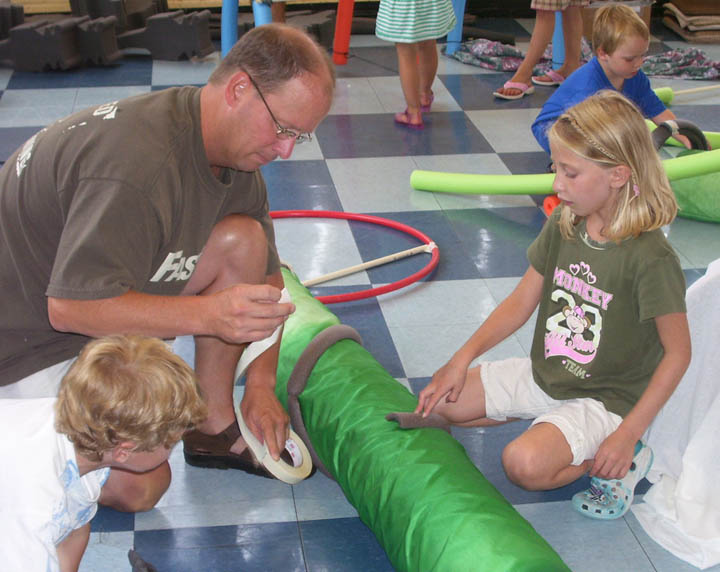
Research shows that pretend play is closely related to developing empathy and other social-emotional skills. As children pretend and play in Coming to Rhode Island, they learn to relate to and communicate with one another and to take others’ perspectives. They also explore a wealth of different stories – stories of Rhode Islanders past and present, stories of people of different cultures and backgrounds, stories that encourage them to think about and appreciate what’s unique about themselves and others.


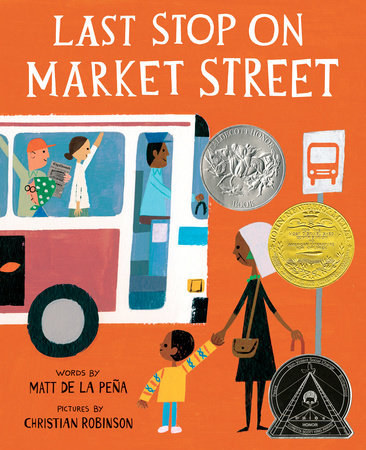
Here are a few curated lists of children’s books that include some excellent stories for encouraging empathy and cultivating compassion, recommended for reading and discussing together:
Look for several of these stories in our new exhibit.

Do you have other favorite books that foster empathy, kindness and inclusion? Please share in the comments.

Monday, November 30, 2015

Support Recess for Rhode Island


The Museum is proud to be a founding collaborator of Recess for Rhode Island, a coalition of organizations and individuals advocating for a statewide recess policy that:

  • Recognizes that children’s self-directed free play is essential to their cognitive, physical, social and emotional health and well-being.
  • Provides at least 20 minutes of recess – optimally 30-40 minutes – every day for all elementary school students (active outdoor play as often as possible).
  • Allows children to freely engage with each other and determine their own play, within reasonable boundaries, during well-supervised recess.
  • Stipulates that physical education class and mandated participation in adult-led sports and games, while also beneficial, shall not replace recess.
  • Prohibits denying recess to an individual student or a class as a disciplinary measure. 
  • Requires accommodations during recess for children with mental and physical disabilities.
  • Recognizes that for some children a supervised school setting is the only safe place self-directed play is available.
Visit www.RecessRI.org to sign on to support a statewide recess policy that promotes time for play, and find resources and research about the importance of recess.

Also follow Recess for Rhode Island on Facebook for the latest recess news and updates.

Monday, September 7, 2015

The Power of Problem Solving

This article, by Museum Education Director Cathy Saunders, was also posted on Kidoinfo.  

As summer winds down and parents think about preparing for the school year, it’s easy to get caught up.

At the Children’s Museum, we’ve been thinking about problem solving a lot lately. We’ve looked at
the obvious connections between the playful learning experiences we try to foster and some of the formal educational standards. Problem solving is a foundational skill that appears in the RI Early Learning Development Standards, Next Generation Science Standards and Common Core Standards and is something that we have a lot of fun with.

August2015PCM

How do you know when your child is exercising problem-solving skills? There are times that seem obvious – she completes a complicated puzzle or negotiates taking turns with a friend. But sometimes it can be easy to miss moments where a child is building his problem-solving toolkit.

Here are some of the things we look for and celebrate:
  • Asking questions can indicate thinking process. Questions and wondering signify curiosity and interest. A “What happens if…?” shows planning for investigation.
  • When a child uses descriptive language she is using observation skills and trying to connect meaning between vocabulary and her observations. This is true of a toddler discovering that a ball is “round” and “big” or a 9-year-old describing the same ball as “a sphere” and “the size of my hand.”
  • Seeking peer support is evidence of a child trying to figure something out; she is looking for assistance and negotiating a social relationship.
  • Stick-to-itiveness. It takes persistence to find solutions through trial and error. Each time he tries he is gaining new information about what works and what doesn’t.
And these are some ways we like to spur children’s problem solving:
  • Ask open-ended questions – you know, those questions that don’t have a “yes” or “no” answer and that need to be answered with descriptive language.
  • Offer just enough support – give a hint or stabilize a wobbly piece.
  • Invite children to problem solve with you. Ask them for their ideas and solutions when puzzling something out.
  • Problem solve out loud. How are children going to know how much problem solving we do on a minute-by-minute basis unless we clue them in? They need to hear us reason things out and think things through.
Problem-solving opportunities occur throughout the day – when getting ready for school, making a meal, playing… Seize the opportunity in those small moments to notice and encourage your child’s innate ability to use logical thinking to reason things out.

Tuesday, December 23, 2014

Unbranded!

This article, by former Museum Executive Director Janice O'Donnell, was also posted on Kidoinfo.

A recent Wall Street Journal article – “Children’s Museums Brand Exhibits with Corporate Sponsorships”– discussed the prevalence of commercial identities in museums, especially children’s museums, across the country. Visitors to children’s museums in many cities make pizza in a replica of a chain pizza parlor, shop in a miniature grocery store named for a regional chain, and try out the ATM at the bank with a national brand. It’s obvious why the sponsors like having their brands prominently featured in a place that attracts thousands of children and parents – it’s like product placement in movies. And it’s understandable why museums, always in need of funding and grateful to the corporations that provide it, go along with this trend.


At Providence Children’s Museum, we’re just as grateful for and just as in need of corporate funding, but we don’t do brands. From the Internet to television to toys, children are the target of commercial interests. The Campaign for a Commercial-Free Childhood (CCFC) cites research that shows that very young children cannot distinguish between TV programming and ads and that, until about age 8, children do not understand the persuasive intent of advertising. This is research that corporations use for their benefit. There’s certainly nothing illegal about this and arguably nothing wrong with it either. It’s how our economy works.

But I would argue that, while for-profit corporations exist to make a profit, museums do not. Nonprofit children’s museums exist for the benefit of children and their families, caregivers and teachers. So our first concern must be what is good for children. Many child advocates believe, as I do, that the commercialization of childhood is NOT good for kids. CCFC cites research that shows that marketing to children is a factor in the child obesity epidemic, that it encourages eating disorders, and promotes sexualized stereotypes, as well as violent behavior. So at Providence Children’s Museum we have made a commitment to being brand-free. Yes, we are deeply grateful to our corporate supporters and very happy to acknowledge their generosity on donor labels, in the media and on our website. But we will not help them sell themselves to children. One of our Board members, who is also a mom and frequent visitor, calls our museum “a commercial-free zone.” And we’re proud to be just that.

For more information on marketing to children visit commercialfreechildhood.org and join the Campaign for a Commercial-Free Childhood.

Janice O’Donnell recently left Providence Children’s Museum, after 35 years of visionary leadership, unwavering passion and tireless commitment to children and families. See an interview with Janice and read her farewell message to learn about her legacy of play and learning.

Wednesday, December 4, 2013

Fun for the Whole Family

This article, by Museum Executive Director Janice O'Donnell, was also posted on Kidoinfo.

Adults are an important part of the Children’s Museum audience.  By sheer numbers, nearly half of all our visitors are adults.

We want adults to want to come to the Museum and to enjoy themselves here.  When the grown-ups are relaxed and engaged, kids are able to explore whatever interests them for as long as they want.  So, our answer to the question “What are grown-ups supposed to do here?” is “Have fun!”


Look through your child’s eyes.  It’s fascinating to find out what she’s drawn to, what she’s learning, what she knows how to do.  You can learn a lot about your child by carefully observing her.  Does she do the same activity over and over until she has it mastered?  What perseverance!  Does he charm adults and connect with other kids?  Great social skills!  Does she silently watch what other kids do and then try it herself?  Good learning strategy!  Even if putting the scarves through the air tubes again isn’t that interesting, your kid sure is.

Follow your children’s lead.  Let go of any agenda and follow their whims.  It’s less important to get to every exhibit than to share a good experience.  It looks like he might stay in The Climber for the rest of the day?  Fine – you can enjoy some leisurely time in the garden.

Credit: John C. Meyers
Join in the fun.  It’s not only okay for grown-ups to play, it’s good for you and an important way to interact with your children.  So play!  Climb up on the packet ship and obey your captain’s order to raise the sail.  When the kids are intent on engineering a series of dams and streams, roll up your sleeves and get involved – just don’t take over!

Have some fun of your own.  Your child is building an elaborate block structure.  Sit down and build one yourself.  Share building strategies.  Or get engrossed in something you like to do while your child is busy doing her own thing nearby.  We love to see adults happily creating kaleidoscopic designs while the kids are off playing with the trucks and rocks


We’re glad to see adults enjoying their Museum visit because they’re more likely to come back, but much more significantly, we love that they are doing something really important for their families.  Parents are learning about their kids and kids are feeling paid attention to and cared for.  Together, they’re creating happy family memories.  The American Academy of Pediatrics says play strengthens parent-child relationships, offering “opportunities for parents to fully engage with their children.”  On your next Museum visit – have some fun!

Monday, April 29, 2013

Turn Off the Books

This post by Education Programs Coordinator Jillian Finkle (also posted on Kidoinfo) is in honor of Screen-Free Week (April 29-May 5, 2013), a national celebration presented by Campaign for a Commercial-Free Childhood that encourages children, families, schools and communities to turn off screen media for a week – to unplug, play, read, create, explore.


My 3-year-old, like any kid, loves to watch TV and play electronic games. We limit his time with these activities but it’s always a battle. I can’t understand why screens are more attractive than the free, open-ended play we promote at the Museum, and sometimes I worry that I’m being too strict about it. But so far I’ve held my ground, even though it feels like the entire world is working against me: from televisions in restaurants, to relatives with iPads, to toothbrushes with cartoon characters on them. At least he loves books, too!

We all know that American kids in general are watching too much TV. The American Academy of Pediatrics recommends limiting children’s screen time (which also includes computers, tablets, and video games) to 1-2 hours of quality media per day for children over age 2 – and none for children younger than 2. These experts cite the need for physical activity and interpersonal interactions and the prevalence of violence even in children’s programming.


To further complicate the issue for parents, e-reading devices have now entered the mix. A recent Scholastic reading study reported that the number of children using e-readers has doubled since 2010. While some of the kids’ story “apps” are little more than subtitled television that read the story for you, perhaps with interactive animated illustrations, others are just like actual books. So then, do they count as “screens”? What difference does it make if a child reads a paper book or an electronic one?

For older children, there can be benefits to using e-readers. Many of them have embedded dictionaries so children can easily look up words they don’t know. The adjustability of font size allows for fewer words on the “page” at a time, which can help focus struggling readers or children with dyslexia. It’s easy to download new content, and many libraries now loan e-titles along with regular books. And then there’s the cool factor – some children might be more likely to read or to read more on an electronic device.

For young children, reading books with adults builds vocabulary and interest in reading and allows for adult-child attention and closeness. Don’t we get those things whether we read a book together on paper or a screen?

Not necessarily. First there is young children’s need for real objects and experiences, and they can’t always distinguish what’s real from what happens on a screen. And turning pages is a physical skill to be learned. But most importantly, it is the adults’ words and actions beyond the story itself that makes reading to children most beneficial, and those are different when we use e-readers.

According a 2011 Temple University study, adult-child conversation was more about the use of the device itself than about the story when reading books electronically, and that impeded children’s story comprehension. Another study at Vanderbilt University found that adults asked fewer story-related questions with video screen content as opposed to a physical book. And of course if there are things to touch on the screen, it can distract a child from the story.

Why not try cutting out or cutting down on the screens during Screen-Free Week? Go outside and play, build a blanket fort, or visit the Museum instead. I’ll be pulling out the most creative ideas in my bag of tricks to make it the best possible week for my 3-year old!


Want to unplug this week? Take the pledge from Campaign for a Commercial-Free Childhood, and find guides for participating in Screen-Free Week. For more screen-free resources, download the Museum's Kids, Play and Digital Media resource sheet.

Wednesday, November 2, 2011

Joyful Learning

This article by Director of Education Cathy Saunders was also posted on Kidoinfo.

Now that kids are back in school, I’ve been contemplating the challenge of keeping learning a joyful experience rather than a task that must be endured.  At the Children’s Museum, we know that the best kind of learning happens when the learner wants to acquire new knowledge or skills, and when the experience is joyful and satisfying.  Yet the truth of the matter is that many of us (children and adults) have had un-joyful, un-playful and un-satisfying learning experiences in our lives.

Girl playing with paste

Even though I was kid who thrived in a school setting, like most people I have frustrations associated with school.  I remember the uncertain feeling I had when I was segregated as a slow reader in 2nd grade and the terror I had of presenting in front of the classroom in 3rd grade.  And I have some negative associations with learning outside of the classroom, too.  After a trip to the Museum of Science, there was always a dreaded moment in the car ride home when my dad would ask, “What did you learn?”  A great cloud would suddenly descend upon my afternoon of watching chicks hatch in the giant incubator because I wasn’t able to articulate my new understanding of how hard a baby bird had to work to get out of its shell.


When we watch our young ones go off to school it can be hard not to project some of our negative associations, and we can get tangled up in our children’s academic pressures.  The result is that we can lose sight of what a fun endeavor learning is, and that can be contagious to our kids.  Children look to us to model behaviors about everything, including attitudes about learning.  They need us be their advocates and cheerleaders as life-long learners.  It’s understandable that they get frustrated; we need to listen to their fears and be patient.  We need to show them that we believe in them and their abilities as creative thinkers and problem solvers.


Children need to see us as excited learners, too.  Quick, grab a pen and make a list of 10 things you’ve learned recently.  My list includes learning the basic rules of a football game (my nephew plays Division III football), that hydrangeas change color based on the soil type, three new yoga poses, and how to create a personalized map on Google.  What does your list include?  Go ahead and share your curiosity and celebrate your new skills and growing knowledge with pride.  It’s great for children to see that we learn, and that we enjoy it.


We want children to know that learning is about being fully engaged and curious about something.  It’s about mastering something new.  It can happen slowly or quickly.  It can happen in groups or alone.  It can be joyful and self directed.  It is a skill in and of itself that, once developed, can make school a lot more fun and interesting.

Wednesday, April 13, 2011

Unplug During Screen-Free Week!

Shut down the video games, turn off the TV and step away from your screens – April 18-24 is Screen-Free Week! This national celebration, which coincides this year with school vacation, is presented by Campaign for a Commercial-Free Childhood and encourages children, families, schools and communities to turn off screen media for a week – to unplug, play, read, create, explore.
Excessive screen time has long been an issue, but the problem is growing as more kids have individual devices and near-constant media access. A national survey by the Kaiser Family Foundation found that 8-18 year-olds average more than 7½ hours per day in front of screens and consuming entertainment media, which adds up to more than 53 hours a week – nearly twice as much time as they spend in school.

And although the American Academy of Pediatrics recommends no screen use for children under 2 years, very young children also spend an astonishing amount of time at screens. According to Nielsen, preschoolers average more than 24 hours of television viewing each week.

Dr. Susan Linn, director of Campaign for a Commercial-Free Childhood and author of Consuming Kids: The Hostile Takeover of Childhood, notes that while not everything on screens is bad, in general screen time encourages passive media consumption and limits the time children spend engaged in creative play. “Unlimited access to miniaturized screens means that even when children are out and about, we are depriving them of opportunities to engage in the world,” explains Linn. “They learn to look to screens rather than to their environment for stimulation, to expect to be entertained rather than entertaining themselves.” Among other implications, screen time can also make kids less physically active and more prone to attention problems, poor school performance and sleep disruption.
So take a break during Screen-Free Week and see what you and your kids can do without. Worried about screen time withdrawal? Here’s a list of fun-filled, playful alternatives, contributed by Providence Children’s Museum educators:
  • Go on a nature walk in a park or around your neighborhood. Take paper and crayons and do rubbings of the bark of different trees. Collect leaves and twigs for a nature art project.
  • Have a family game night. Make popcorn and play fun games like Uno or Cranium. With a deck of cards, learn how to shuffle and try building card houses.
  • Hold a family talent show. Plan a few days ahead for practice, props and costumes. Don't tell each other what talent you're going to perform so everyone's act is a surprise!
  • Take a dark walk – bring flashlights and explore your neighborhood at night.
  • Have a book-a-thon. Go to the library in the afternoon. Then, after supper, climb into bed and read aloud to each other. Don’t limit the number of books or chapters – just keep reading for as long as everyone stays awake!
  • Design a mini-golf course inside or outside using toys and things found around the house. Take turns with a real or plastic putter and golf balls.
  • A different hide-and-go-seek challenge: take turns hiding and searching for something small, like a stuffed animal.
  • Make outside obstacle courses using jump ropes, balls and chairs and have a relay race. Take turns designing new courses.
  • Have a toy carwash. Bring out cars and any toys that need a scrub and gather sponges and soapy water.
And don’t worry if kids whine about being bored without screens – let them figure it out! It’s amazing how boredom can inspire creativity if you allow the space for it to happen.

Have a wonderful UNPLUGGED week!

Other resources:
–––––––––––––––––––––––––––
For more unplugged fun, visit the Museum during school vacation! Meet llamas, lambs and other Fleecy Friends. Fold and crease paper to create fabulous flying contraptions. See performances by the Pumpernickel Puppets and the State Ballet of Rhode Island. In celebration of Earth Day, watch No Time to Waste, an interactive family comedy about recycling. And for adults, get tickets to Unplugged, the Museum’s 2011 gala fundraiser, and support the Museum and child-directed play!

Thursday, March 31, 2011

Play With Your Kids!

This article by Executive Director Janice O'Donnell was also posted on Kidoinfo.

The big idea behind Providence Children’s Museum is that the best kind of learning happens through play. Kids learn all kinds of important things when they follow their own interests, make choices, try things out, solve their own problems, create their own characters and situations – by playing. As an educator, I am a true believer in this approach.

As a parent and grandparent and a friend of parents, grandparents and kids, I am also convinced that play serves an important role in family dynamics. I advocate for playing with your kids – not interfering in their independent play, but taking a playful attitude to parenting whenever you can.

A simple example of what I’m talking about: a few days ago, in the midst of the get up, eat your breakfast, get dressed, we’re going to be late routine, I said to 9-year-old Finn, “Brush your tooth.”
“My tooth?” he said, “Brush my tooth?” and headed off to the bathroom chuckling instead of complaining. It was just a moment of silliness but it softened the nag element. His giggles made me happy and my impatience dissipated. A playful attitude can change everything!

I highly recommend play as a hedge against irritation. You know those recurring trouble spots – fussing about going to bed, picky eating, sibling scuffles – that really frustrate you. Fend them off by getting playful before you get annoyed. Maybe your kid is pokey about getting dressed in the morning. Challenge her to a getting-dressed race and be really goofy about it. Act as if you are hurrying as fast as you can but make silly mistakes (like putting on your jacket inside out) that slow you down so that she wins. When you’re both laughing, it’s really hard to be angry at each other. Let’s face it, the only way you can win a battle of wills with a child is by not engaging in one.


Beyond keeping the peace, playing with your kids lets them know you’re paying attention to them. From their point of view, it can seem that your attention centers on keeping them safe and making sure they wash their hands and do their homework. When you play with them, you let them know you enjoy them and that feels really good – to the kids and to the grown-ups, too.


Parents are busy, but playing with your kids really doesn’t need to take a lot of time. You can fit it in with things you’re doing anyway. A car ride, for example, is the perfect time for singing together. My grandkids and I like songs that let the singers make up verses as they sing. “Down by the bay, where the watermelons grow” is a good one. The kids sing, “Did you ever see a giraffe…” and I rhyme it with something funny, “in a bubble bath!” They lead and I respond to them. We’re as silly as we can be and have a lot of fun.


Kids play all the time, so it’s easy to join them. Say you’re making dinner and your child comes in and roars. “Yikes! A lion!,” you say and, to prevent a lion attack, you give her a green bean. Or you’re sitting in a waiting room and he’s playing with his little cars. Take one and join his game. Vrooom! You can set a place at the table for her imaginary friend and include the figment in the conversation.

Why not play with your kids as often as possible? It makes life easier, it makes everyone happier, it’s good for them, it’s good for you – and it’s FUN!


For more playful tips, check out “Play With Your Kids! A How-To, Why-To Guide for Parents” by Providence Children’s Museum. The booklet was created to inspire families to play and learn together and is available in English and Spanish; click here to learn more about the guide.

Tuesday, December 1, 2009

Play's the Thing

Thanks to our PlayWatch listserv and the smart and resourceful people we follow on Twitter, we've been overwhelmed lately by new articles, blogs, resources about play. There's so much information out there and I don't know how people keep up with it! Here's a list:
  • Shared with the PlayWatch list by Museum director Janice O'Donnell: "I am so excited about a report recently put out by the "Healthy Parks and Playgrounds Task Force" in Cambridge, MA. Here's a resource that I hope every city and town official in RI, every Parks and Recreation Department, everyone who cares about kids and free play will take a good deep look at."
  • From last week's Washington Post: The playtime's the thing, an article exploring debates about the importance of playtime in preschools.
  • Overparenting has been a topic on several TV and radio shows in the last few weeks, inspired by this Time Magazine article about helicopter parenting - and it's backlash. Also check out How Not to Helicopter on Newsweek's NurtureShock blog.
What have YOU read lately about kids and play? Please leave us a comment and a link. Want to get more regular resources? Join our PlayWatch listserv or follow us on Twitter.

And join us TOMORROW from 7:00 - 8:30 PM for a community conversation about how we can support children's unstructured play by Building Community.