Showing posts with label innovation. Show all posts

Tuesday, May 1, 2012

Unplugged: Celebrating Creativity and Innovation

Last week, we held the Museum’s annual fundraising gala, “Unplugged – The Way to Play.” It was a fun and festive event that celebrated creativity and innovation, and honored seven local innovators who exemplify creative thinking. They shared their reflections on the importance of play – for their own creativity, and at the Children’s Museum.

What were your favorite creative ways to play as a kid, and how did they contribute to your creativity as an adult?

Ava Anderson – Founder/CEO, Ava Anderson Non-Toxic:
Hands down – dress up! Another favorite: fort building with my brother, from snow forts to elaborate pillow and blanket-covered contraptions in our grandmother’s living room.

Barrett Bready – President/CEO, NABsys, Inc.:
I loved interacting with nature, like an exploratory hike through the woods or observing animal life in my favorite stream or a Rhode Island ocean inlet.  I could spend hours collecting rocks or shells.  My career also involves exploring the natural world... just on the nanoscale.

Dennis Littky – Co-Founder/Co-Director, Big Picture Learning and The Met School: My creativity was shown through playing sports and drawing. My parents supported all creative acts that helped me keep being creative throughout my life.

Navyn Salem – Executive Director, Edesia Global Nutrition: My mother never let my younger brother and me watch TV, ever, unless it was Sesame Street at dinnertime. We had to make something up. We made instruments out of the vacuum cleaner; forts out of sheets; telecommunications systems out of string, index cards and clothespins; new living spaces out of the closets; and played Risk and Monopoly for hours.I still love to play games of any kind, like to make my own cards, and detest the racket of the TV unless it is dark out.

Jim Stallman – Owner, M.H. Stallman Co: We used to build forts and make structures in a lot of different ways. We did with sticks and wood what kids are doing [in Imagination Playground] with our foam blocks.


Max Winograd – President/Co-Founder, NuLabel Technologies: I set up a fort with chicken wire and carpeting in my parents' unfinished basement, where my friends and I would take apart electronics and engineer new contraptions. We created our own newspaper during elementary school that eventually became a self-published paper in 5th grade. And my three younger brothers and I invented sports like base-ketball, which involved a basketball and a baseball bat.

Meg Wirth – Founder/CEO, Maternova:
I used to do a lot of strange things like make stews and dyes out of flowers and berries with my best friend. We also performed surgeries on fruit and transplanted the heart (seed) with a bead, inserting Alka seltzer to speed the healing, and spent a lot of time mummifying things. Maybe there is a link between the apple surgery and my interest in health care.  I was definitely encouraged to play outside and to use creativity whenever and wherever.

How do you think the Children's Museum nurtures kids' creativity?

Barrett Bready: I was fortunate to have been introduced to the Children's Museum at a very early age when it was located in Pawtucket – first as a participant and then as a "staff kid," when my mom worked as Director of Development.  I am pleased to see that the concept of "hands-on" learning has been preserved and expanded.

Navyn Salem: My girls and I spent hours at the Children’s Museum when they were little.  I was even a bit teary-eyed when my youngest “graduated” from Littlewoods.  The Museum is an amazing space to escape to. Children have fun and learn something at the same time.  We are lucky to have this treasure in our city.

Max Winograd: The hands-on play at the Children's Museum stretches a child's definition of what's possible. It also reinforces classroom learning in ways far more entrepreneurial and self-driven than a typical elementary school classroom environment. Most importantly, that hands-on play and learning becomes more ingrained than any other method of instruction. I bet children who regularly played at and explored the Children's Museum were found to have – later in life – launched new ventures and emerged as highly creative, innovative adults and leaders.

Learn more about the innovators' and the Museum's creative work in this Unplugged slideshow:

Tuesday, May 24, 2011

Gone Conferencing, Part I: Work(ish)

Last week, several of Providence Children’s Museum’s staff headed to Houston, TX for a few days of fun and learning during InterActivity, the annual conference of the Association of Children’s Museums. This year’s conference theme was “Innovation is Child’s Play,” and we all walked away with plenty of new ideas and inspiration.

Here are some of our many takeaways:

Chris Sancomb, Exhibit Designer
I really enjoyed meeting fellow designers and peers and discussing the similarities to process, problems and solutions. The workshops that involved participation were opportunities to build spontaneous team chemistry, and explore multiple viewpoints and working methods. Sometimes it clicked and sometimes not, but it reinforced the bond our Providence Children’s Museum team has.

A pre-conference workshop on cognitive science and exhibit design was awesome! I also really enjoyed two workshops on inclusion and the museum environment – one on universal design and the other focusing on autism and the spectrum of visitors. Very informative and helpful in assessing what we have and what we can do for the future.

And of course I enjoyed the time out of the office with my peers, where we sometimes talked shop, sometimes we talked big picture and dreams. I think all go to building strength back at home.
Chris and other conference attendees at a workshop.
(Courtesy of Paul Orselli)


Janice O’Donnell, Executive Director
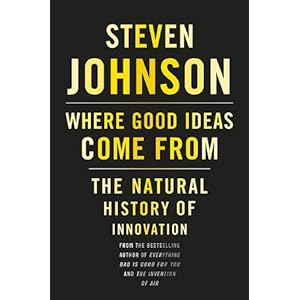
  • Keynote speaker Steven Johnson's concept of “the slow hunch” – let an idea grow gradually from inspiration. That's what we hope experiences at the Museum give our visitors – the beginning, the inspiration for their further learning.
  • Getting measurable ways to track moving from “Nice to Necessary.” Children's museums are nice places – no one argues with that – but we want to know we're addressing real needs, that we play a necessary role in our communities and beyond. Jeanne Vergeront said that being necessary starts with looking past our walls. We're pretty externally oriented – we work closely with Children's Friend Head Start, Providence Boys and Girls Clubs, DCYF and many other organizations to help them meet the needs of children and families in our community. I want us to look at these collaborations to make sure they are relevant and sustainable, which Julia Bland described as key to being necessary. She should know; she directs the Louisiana Children's Museum in New Orleans, which continues to be a major player in the city's recovery from the devastation of Katrina.
  • There has been tremendous growth in the number of children's museums over the past several years and a lot of museums have gotten bigger. Consequently, the market for hands-on exhibits has grown. More and more exhibit design firms have popped up, many of the larger children's museums are creating exhibits to sell or rent, and relatively fewer museums are designing and building their own unique exhibits. While this might be a trend toward efficiency, it's also akin to the “malling of America” – children's museums all over the country look a lot alike. I think we’re approaching a tipping point. There were several discussions and presentations about “the DIY alternative,” creating unique exhibits in-house (which was the norm 15-20 years ago). Paul Orselli showed images from several children's museum, including ours (thanks, Paul!), pointing out that all are examples of DIY museums – all imaginative, local, artful and themselves. In a session about “Courageous Design,” Brenda Baker from Madison (WI) Children's Museum and Nancy Stice from Phoenix Children's Museum presented on creating their museums in collaboration with their local communities and artists. The images of both Madison and Phoenix knocked me out – gorgeous places and you'll not find anything like them anywhere else.
http://www.childrensmuseumofphoenix.org/Common/Img/wideshot.jpg
Climber, © Children’s Museum of Phoenix
Two-story climber made with salvaged materials.
© Madison Children’s Museum

Robin Meisner, Director of Exhibits
The sessions and conversations I was part of have led me to thinking...

• that we and similar museums around the country have to think about the balance between encouraging caregivers to play with their children and encouraging them to be students of their children (learning from their kids by observing and celebrating their play and learning). We need to try different ways of communicating the value of the learning that happens through play to caregivers.

• that we need to consider children at the upper end of our age range carefully... what works for them about what we do and what might we do differently, perhaps even exploring the role new technologies might have in engaging them.

• that inspiration can come from anyone or anything, and that I truly enjoy working with our team in thinking about the design and development of our exhibits and environments.

Carly Baumann, Education Programs Coordinator
A favorite experience at the conference was riding the hotel’s glass elevators: one side facing downtown and the other creating the illusion of plummeting to the lobby. During our session about healthy risk, my co-presenters and I discussed the feeling of risk when riding the elevators as the ingredient that kept us involved in the play. It's typical for riders to silently face the doors in an elevator, but with the walls transparent, strangers came together in their love or aversion to the sensation – risk as "a social lubricant," as Aaron Goldblatt expressed it.
Speaker Dr. Milton Chen’s measurement of a great learning center: “Do the kids run in at the same rate they run out?” As much fun and learning as we had in Houston, I couldn't wait to see excited kids' feet flying up the entrance to Providence Children's Museum again!

Thursday, January 6, 2011

"Mistakes ­are the Portals of Discovery"

This article by Director of Education Cathy Saunders and was originally posted on Kidoinfo.

When I started working at the Children’s Museum five years ago, I quickly realized that no matter how neat my hair was or how smart my outfit, it all became irrelevant when I walked past the Museum’s “fun-house” mirrors. It was pretty hard to take myself too seriously when I saw short rounded legs and an elongated neck reflected back to me.

Adults and children can get caught up in doing things right, fitting in, being super student or super parent. There are pressures to get the homework done, have the right toys, and be as good at everything as your peers. It’s easy to forget the fun-house-mirror view of the world – that the irregularities and mistakes can be joyful opportunities.

Think about our evolution from birth into adulthood for a moment. An infant doesn’t know what a mistake is. There are no “shoulds” in his world; everything is an open-ended exploration. A toddler will topple over, and unfazed, get right back up and continue on to her destination. By nature, preschoolers interpret the world creatively. A pencil is so much more than something to scribble with; to them it is a drumstick, a magic wand, a stick to dig in the dirt with, or perhaps a wriggling snake.


Too often though, as we get older, we lose this aptitude for divergent thinking. We start seeing a stick as a stick, not as an invitation into imaginative inquiry. But this kind of creativity is at the heart of the skills that experts agree are needed for the 21st century and there is much concern that we are raising a generation of children who are not adequately prepared to meet the complex challenges the future holds. (This has been a hot topic of discussion recently, and for those of you who want to check some of it out, I suggest Daniel Pink’s 2005’s bestseller “A Whole New Mind: Why Right-Brainers Will Rule the Future“; YouTube videos of creativity expert Sir Ken Robinson’s lectures about divergent thinking and the education system; and Newsweek’s recent article “The Creativity Crisis”).


I think our discomfort with mistakes is one of the key elements to this crisis of creative thinking. We have been so trained to look for the right answer that we’re afraid to see any other choices. I see it in children who tell me what they think I, the instructor, want to hear rather than interpreting their own discoveries. I find it in myself, too, as I fret over buying a birthday present or planning a workshop schedule (or writing a blog post!).

In the heat of trying to be superhuman, I can forget the wise words of Thomas Edison: “I have not failed. I’ve just found 10,000 ways that won’t work.” I was able to embrace this attitude of welcoming mistakes with new relish recently when I discovered “Beautiful Oops!“ In this clever and artistic pop-up book, Barney Saltzberg encourages us to see a stain or a rip as starting point for creativity and inspires the imaginations of both children and adults.

So I ask of us parents, educators and citizens of the world: Can we teach our children – and ourselves – to find the meaning in our mishaps? To laugh and say, “What are we going to try next?” when things don’t go according to plan? I certainly hope so because it is much more fun than feeling defeated!


James Joyce is credited with the quote used for the title.

Wednesday, April 28, 2010

A Year of Growth

Last night Museum Board members, staff and volunteers celebrated the tremendous accomplishments of 2009 at our annual meeting. It's always exciting to look back at what we've done in a year but last night made us especially proud because we responded to a time of great uncertainty with creativity and innovation, which allowed us to welcome a record number of visitors, expand our reach in the community, and further our advocacy about the importance of children's unstructured play.

Take a look at some of last year's highlights, in words and photos:


Click here to download our 2009 Annual Report and get the full story on last year's accomplishments.

Friday, November 6, 2009

We WON!

An email sent just 5 minutes ago by Museum director Janice O'Donnell to our board and staff:

Subject: We won! Innovative leadership
Date:
Fri, 06 Nov 2009 18:13:51 -0500
From: Janice O'Donnell

I am proud to tell you that Providence Children's Museum has won the New England Museum Association's Leaders in Innovation Award!

The NEMA Leaders in Innovation Award recognizes New England museum programs and initiatives that advance the museum field in new and creative ways. Innovation can take many forms: an exhibit that conveys the story to visitors in an innovative way; cutting-edge systems for collections management; engaging communities with methods not traditionally used in museums...

The Museum's application for this award touted "The Power of Play: Innovations in Messaging the Mission," describing our mission-based initiatives and advocacy including the Play Power exhibit, play-focused programs, Museum-organized community conversations, the blog and articles, the PlayWatch listserv, etc. The judges found that:

The Power of Play has an integral connection with the Museum's mission and represents a long-term commitment to a broadly-conceived initiative... takes the museum's daily activities and puts them under a lens... engaging families and the community in the process. The project positions the museum as a leader in its field.
...the commitment to understand one's mission, core values and activities; to engage the public in this journey; and to utilize social media tools for these purposes is a commitment that museums of all budget sizes can emulate.


Megan and Cathy will accept the award at NEMA's annual conference next week and our work will be featured in upcoming NEMA publications and at the 2010 conference.

What I'm most proud of is this award recognizes the thoughtful, important work the Museum does every day and everyone of us – all staff and volunteers and AmeriCorps members and everyone – contributes to this work through deep commitment to our mission and to children and families. We all share this award – Congratulations!

Janice