Showing posts with label conference. Show all posts

Tuesday, May 24, 2011

Gone Conferencing, Part II: Play!

Before and in between InterActivity conference sessions, we filled our time with some excellent museum adventures and plenty of other fun!

Art Car Museum

Megan:
The Art Car Museum is the only museum of its kind in the country, a mix of intricate, wacky art cars and gallery space. The story of how Houston artist Mark David Bradford created the current exhibit of (fully functional) art cars resonated with all of us: he used silverware that was abandoned by the airlines post-9/11. Reclaimed materials become beautiful, provocative art!
Janice: The best thing I saw in Houston – I love quirky museums and this is one of the quirkiest! Very much itself – obviously a meeting ground for art car aficionados. Staff was friendly, enthusiastic and knowledgeable. The art cars on exhibit were fantastic (in the true sense of the word), beautifully crafted, and had a great sense of humor. I loved the dragon car with hundreds of thousands of spoons for silvery scales. Biggest regret: Leaving the day before the BIG Houston Art Car Parade!
A distant relative of Nori, our rooftop dragon?

The Museum of Fine Arts, Houston

Robin: I really enjoyed playing in Carlos Cruz-Diez's exhibition “Color in Space and Time.” The works encouraged us to experiment with optics and color by moving our bodies around the pieces – it was a bit science, a bit color theory and lots of fun. I especially liked sharing the exhibit with colleagues and learning favorite tricks from the MFA's docents.

Megan: The exhibit was really a playground of perception, inviting us to investigate how colors change and blend depending on distance and motion.
© 2010 Carlos Cruz-Diez/Artists Rights Society (ARS), New York/ADAGP, Paris

Children’s Museum of Houston

Our visit to the Children's Museum of Houston during a conference evening event revealed an amazing water play area, inspirational studio space, and great activity tables!
Robin, Janice and Carly shoot streams of water into a giant basin.

Carly: I wandered into the art studio, lured by rolls of duct tape in crazy patterns and colors. The volunteers leading a duct tape wallet-making activity were pre-teen sisters who told me about how they also serve on a kids' advisory, offering their suggestions and feedback for the museum in regular meetings. The girls radiated an empowered sense of belonging to the museum, while helping it grow with their own ideas. I love this!

Other fun stuff

We went to the opening night Pecha Kucha event, led by Paul Orselli. Ten inspirational presentations and a perfect way to start the conference.

Yes, it's true that everything's bigger in Texas. But we wished we'd turned that other slogan on its head by wearing “don’t mess with Rhode Island, either” t-shirts.

Some of us enjoyed the aforementioned elevators more than others, zooming past floor after floor from top to bottom of the hotel!

And we might have been spotted with children's museum folks from across the country carousing at a dueling piano bar…

A big thanks to all of our children's museum colleagues for the inspiration, ideas and FUN!

Gone Conferencing, Part I: Work(ish)

Last week, several of Providence Children’s Museum’s staff headed to Houston, TX for a few days of fun and learning during InterActivity, the annual conference of the Association of Children’s Museums. This year’s conference theme was “Innovation is Child’s Play,” and we all walked away with plenty of new ideas and inspiration.

Here are some of our many takeaways:

Chris Sancomb, Exhibit Designer
I really enjoyed meeting fellow designers and peers and discussing the similarities to process, problems and solutions. The workshops that involved participation were opportunities to build spontaneous team chemistry, and explore multiple viewpoints and working methods. Sometimes it clicked and sometimes not, but it reinforced the bond our Providence Children’s Museum team has.

A pre-conference workshop on cognitive science and exhibit design was awesome! I also really enjoyed two workshops on inclusion and the museum environment – one on universal design and the other focusing on autism and the spectrum of visitors. Very informative and helpful in assessing what we have and what we can do for the future.

And of course I enjoyed the time out of the office with my peers, where we sometimes talked shop, sometimes we talked big picture and dreams. I think all go to building strength back at home.
Chris and other conference attendees at a workshop.
(Courtesy of Paul Orselli)


Janice O’Donnell, Executive Director
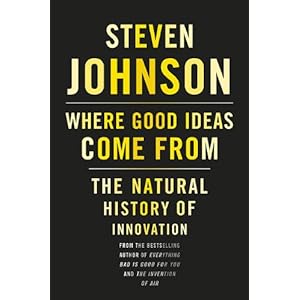
  • Keynote speaker Steven Johnson's concept of “the slow hunch” – let an idea grow gradually from inspiration. That's what we hope experiences at the Museum give our visitors – the beginning, the inspiration for their further learning.
  • Getting measurable ways to track moving from “Nice to Necessary.” Children's museums are nice places – no one argues with that – but we want to know we're addressing real needs, that we play a necessary role in our communities and beyond. Jeanne Vergeront said that being necessary starts with looking past our walls. We're pretty externally oriented – we work closely with Children's Friend Head Start, Providence Boys and Girls Clubs, DCYF and many other organizations to help them meet the needs of children and families in our community. I want us to look at these collaborations to make sure they are relevant and sustainable, which Julia Bland described as key to being necessary. She should know; she directs the Louisiana Children's Museum in New Orleans, which continues to be a major player in the city's recovery from the devastation of Katrina.
  • There has been tremendous growth in the number of children's museums over the past several years and a lot of museums have gotten bigger. Consequently, the market for hands-on exhibits has grown. More and more exhibit design firms have popped up, many of the larger children's museums are creating exhibits to sell or rent, and relatively fewer museums are designing and building their own unique exhibits. While this might be a trend toward efficiency, it's also akin to the “malling of America” – children's museums all over the country look a lot alike. I think we’re approaching a tipping point. There were several discussions and presentations about “the DIY alternative,” creating unique exhibits in-house (which was the norm 15-20 years ago). Paul Orselli showed images from several children's museum, including ours (thanks, Paul!), pointing out that all are examples of DIY museums – all imaginative, local, artful and themselves. In a session about “Courageous Design,” Brenda Baker from Madison (WI) Children's Museum and Nancy Stice from Phoenix Children's Museum presented on creating their museums in collaboration with their local communities and artists. The images of both Madison and Phoenix knocked me out – gorgeous places and you'll not find anything like them anywhere else.
http://www.childrensmuseumofphoenix.org/Common/Img/wideshot.jpg
Climber, © Children’s Museum of Phoenix
Two-story climber made with salvaged materials.
© Madison Children’s Museum

Robin Meisner, Director of Exhibits
The sessions and conversations I was part of have led me to thinking...

• that we and similar museums around the country have to think about the balance between encouraging caregivers to play with their children and encouraging them to be students of their children (learning from their kids by observing and celebrating their play and learning). We need to try different ways of communicating the value of the learning that happens through play to caregivers.

• that we need to consider children at the upper end of our age range carefully... what works for them about what we do and what might we do differently, perhaps even exploring the role new technologies might have in engaging them.

• that inspiration can come from anyone or anything, and that I truly enjoy working with our team in thinking about the design and development of our exhibits and environments.

Carly Baumann, Education Programs Coordinator
A favorite experience at the conference was riding the hotel’s glass elevators: one side facing downtown and the other creating the illusion of plummeting to the lobby. During our session about healthy risk, my co-presenters and I discussed the feeling of risk when riding the elevators as the ingredient that kept us involved in the play. It's typical for riders to silently face the doors in an elevator, but with the walls transparent, strangers came together in their love or aversion to the sensation – risk as "a social lubricant," as Aaron Goldblatt expressed it.
Speaker Dr. Milton Chen’s measurement of a great learning center: “Do the kids run in at the same rate they run out?” As much fun and learning as we had in Houston, I couldn't wait to see excited kids' feet flying up the entrance to Providence Children's Museum again!

Friday, May 14, 2010

Playing (and Working) in Minnesota

Some more inspiration from last week’s Association of Children’s Museums conference:

Carly Loeper, exhibit & program developer:
• In a session on Play and Risk, Aaron Goldblatt made the argument that risk is the ingredient that keeps us in play and it's the challenge that makes the action worth doing. That risk drives people into intense social experiences. I love to witness families taking risks together. When kids, and even parents, hold a worm for the first time in our worm programs the interactions are intense and families so supportive of another in the shared joy – and disgust! I can't wait to see risk-taking reach new heights when we open The Climber in June.

• We heard Peter Benson of Search Institute talk about "spark." In Peter's research into what makes kids thrive, he found they have a common connection to their spark - the quality, skill, talent, or commitment that gives life joy, energy and purpose. I deeply agree that instead of guiding children in any one direction or simply telling them "you can do anything" that we can serve this generation best by helping them find and nurture their spark from the inside out.


Megan Fischer, marketing & public relations manager:
• I was excited to hear an update on a national museum survey we participated in, organized by Reach Advisors. They’re working to understand a group they’ve named “museum advocates” – people who have a life-long love of museums and early “sticky memories” of museum going – and what the museum field can do to work together to ensure we keep growing this group. Their research is fascinating!

• Dan Palotta, author of Uncharitable, talked about the double standard we have for nonprofit vs. for profit organizations – that we’re essentially expected to operate by different rulebooks in terms of staff compensation, marketing and revenue development. “The nonprofit sector is in extreme disadvantage to for profits on every level…We need to get back to our wildest dreams and the courage to pursue them and put THAT out to the public.”

• Martha Erickson from the Children & Nature Network spoke about how “Children’s museums are in a position of power to influence policy makers, other informal educators and parents” – something that resonated since it’s what we’re trying to do. She also talked about how children have an innate attraction to natural things and we need to nurture it, something I hope will happen with all of the natural materials in our new Underland exhibit.

Minnesota Children’s Museum presented about expanding community engagement and their Reggio-inspired approach to documentation – using photos of kids’ processes to generate new questions and to involve parents. It’s something we’ve been talking about and experimenting with lately, too – more on that later.


Cathy Saunders, director of education:
• Keynote speaker Dr. Johnnetta Cole, director of the National Museum of African Art, reminded us of the important role that children's museums play in promoting and modeling diversity and inclusion.

• I watched videos of families playing at two museums - Science Museum of Minnesota and Boston Children's Museum. Researchers are using these videos to better understand shared learning between children and adults and to learn how to design better exhibits. I love that there is a growing body of evidence of the learning that happens in informal settings like museums!

• I worked at the Science Museum of Minnesota for eight years and it was a lot of fun to visit again and catch up with my old colleagues. They even helped me out with one of the sessions I presented at - one co-presented with me and another provided us with fun materials like magnets and pattern blocks to play with. All the folks from the exhibits department were very excited to hear that we will be opening a climber designed by the Luckeys. The museum field is very supportive.


Museum adventures!
Megan: Carly and I visited both the Science Museum of Minnesota and Minnesota Children’s Museum. I loved the children’s museum from the moment we walked through the door – open space with lots of light and I appreciated the beauty of their environments and their attention to detail. We especially liked an art studio room with tabletop areas for exploring materials of different textures.

Carly: Crawling through the multi-level system of ant tunnels was a total transformation of environment - I felt like an ant! It was fun to experience a startle when I turned a corner on my hands and knees face-to-face with a giant ant protecting her larvae babies behind her.

Tuesday, May 11, 2010

The Whys & Hows of “Where Do the Children Play?”

Carly Loeper (exhibit & program developer), Cathy Saunders (director of education) and I (Megan Fischer, marketing & public relations manager) just got back from St. Paul, Minnesota, from the Association of Children’s Museums’ (ACM) annual conference. We always look forward to this opportunity to be with our fun and creative colleagues, hear what they’re up to at their museums, and just be inspired by lots of new ideas and great conversations. We know we’ll leave with our heads buzzing with thoughts and visions, eager to get back home to share with the rest of the staff and put our new ideas in to play.

On Thursday, Carly and I were excited to present about the work we’ve done to raise awareness of the critical importance of children’s unstructured play in our community. We talked about the creation of our Play Power exhibit and the outreach efforts we’ve taken on, including community screenings and discussions of the documentary “Where Do the Children Play?,” which explores why children’s opportunities for unstructured play are increasingly limited, especially outdoors.

And Friday, during a “Nature, Nurture and Play” salon, Dr. Gil Leaf (husband of Dr. Elizabeth Goodenough, originator and outreach coordinator of “Where Do the Children Play?”) shared a 7-minute clip of the documentary. It was fun for us to see the film we know so well (well enough to quote extensively, in fact!) in this context. He spoke about how children’s museums can “become the locus in your community of getting the dialogue going” about the need for play and used US as an example for using the film for community organizing and to inspire conversation about play.

So because of that, I thought we should share a quick overview of why and how we’ve used the film to involve the community in advocating for children's free play:

The Decision
A few years ago, we took a newly directed approach to play, deciding to be much more deliberate about why children’s self-directed play is important, especially with our message to parents and caregivers. In addition to our new play exhibit and play-focused public programs, we also felt it was absolutely necessary to advocate beyond the Museum’s walls. We first screened “Where Do the Children Play?” for our staff and immediately saw that it was provocative, would inspire conversation, and decided it was an ideal tool to convey our message. We also knew it was important to screen the film with community partners to reach a broader audience than we would just at the Museum, to ensure that this movement was shared.
The Screenings
We began showing “Where Do the Children Play?” in winter 2009 and have since hosted eight community screenings and discussions with partners including schools, libraries, PTAs and other community groups – our ninth is coming up next week! Each time we’ve followed the hour-long film with an audience conversation, moderated by Museum director Janice O’Donnell and panelists that we call conversation “instigators” because it’s their job to spark the discussion and keep it going. We’ve had a wide range of panelists – educators from preschool through college, pediatricians, developmental psychologists, children’s policy advocates, urban planners, and environmentalists. Panelists have looked at the issues affecting children’s play from many different angles and have drawn audiences of parents, teachers, after-school program providers, parks and recreation and planning personnel, and other community members into incredibly lively, thought-provoking discussions about the importance of giving kids more opportunities for free play and outdoor play during the school day and in out-of-school-time activities.

The Follow Up
Each screening has been so different, powerful, inspiring that we’ve had to share the highlights on our blog to make the conversation more visible and keep it going:
Temple Beth-El, Providence (March 2010)
St. Michael's Country Day School, Newport (January 2010)
Pennfield School, Portsmouth (October 2009)
Audubon Environmental Education Center, Bristol (June 2009)
Highlander Charter School, Providence (May 2009)
Lincoln School, Providence (February 2009)

From these discussions, it was apparent that many people are concerned about the lack of time and space for children's play – and that they were eager to keep talking. We wanted to find a way to continue the rich conversations electronically, to continue to connect people and grow the dialogue, and we launched a community discussion listserv called “PlayWatch: Connecting the Community to Promote Children’s Play” last summer. The listserv now has more than 330 members and has fostered an active, enthusiastic exchange of ideas about a variety of topics. We’ve passed the tipping point in our community’s awareness of the importance of play and the conversation is growing!
PlayWatchHeader

Please contact me at fischer@childrenmuseum.org or (401) 273-5437 ext. 126 if you’d like to know more about our use of “Where Do the Children Play?” and our other play outreach and advocacy efforts.

And stay tuned for another conference-inspired post!