Showing posts with label other museums. Show all posts

Monday, July 15, 2013

New in Play Power!

The most recent addition to our Play Power exhibit is an intriguing tabletop activity that invites visitors to use colorful metal chains to create imaginative designs on magnetic easels.  Adults and kids of all ages have been delighted as they “draw” lines and squiggles, form shapes and letters, make patterns and figures – then wipe it clean and start again!

We’re committed to providing a range of activities that promote different types of play and to keeping fresh by frequently changing elements of our exhibits.  This new station enhances the existing Play Power activities with additional opportunities for creativity, artistic expression and tactile exploration.  Visitors can create designs with varying degrees of detail, perfect for engaging older kids and grown-ups.  In the words of a kid tester, it’s “supremely awesome!”

Exhibit intern Cory's chicken creation.
Says Exhibits Director Robin Meisner:
“Visitors sometimes ask where ideas for new exhibits and activities – like this one – come from.  While we develop, design and fabricate our exhibits in-house, we draw on a variety of sources for inspiration, ranging from conversations with visitors and colleagues to our own memories from childhood to other playful environments (including museums).  We first encountered a version of this new activity at Boston’s Museum of Science in an exhibit on making models and loved the way it allows visitors to “draw” and create without consumable materials.

As one of our labels in Water Ways says, “Kids learn from each other.  Other people’s good ideas inspire new ways of thinking.”  We think this applies to people of all ages.”
We’ve certainly witnessed a lot of interesting thinking and designing since the new activity debuted last week…
Museum director Janice O'Donnell created a summer scene...
...alongside artistic grandson Finn.
The table was buzzing with activity, attracting curious onlookers.
Finn's finished masterpiece – his recreation of the well-known painting "American Gothic!"

Sunday, November 4, 2012

An Interview with Robin Meisner

Meet Museum Exhibits Director Robin Meisner, who guided the exhibits team in creating ThinkSpace.

Describe your background and your role at the Museum.
I first came to the Museum in 1998 as an AmeriCorps member and was on the Head Start team.  When I finished my AmeriCorps year, I was hired to be the Museum’s science developer in charge of school-age science programs, exhibits and community outreach through the Learning Club team.

After four years, I went to London to graduate school for a PhD in Education Research. I studied and filmed three exhibits at Providence Children’s Museum, three at the Exploratorium in San Francisco and three at the Science Museum in London to see how exhibits encouraged children’s play in different types of museums. After I graduated, I was director of programs at the MIT Museum and then came back here as director of exhibits.

Robin with a Learning Club, during her first stint at the Museum!

How does the Museum choose exhibit topics?
We’re working toward an assessment of all of the Museum’s exhibits, of the range of activities they offer in terms of play value, types of exploration and different disciplines – humanities, social sciences, sciences, arts – so we can make sure we have a nice balance. We’re also thinking about maintenance issues. In the future, this assessment will help inform what exhibits we take out and what we put in next.

With ThinkSpace, we knew the space in the Museum that needed some attention, and the exhibits team was very excited about shape. It’s something the Museum has had an exhibit about almost since opening and is relevant for our audience.  We wanted to take it beyond the basics of shapes to spatial thinking, which encompasses a much broader look at the world around us.

Robin, Janice (Museum director) and Valerie (Graphic Designer) in conversation about ThinkSpace graphics.

What’s unique about ThinkSpace?
It’s a challenging physical space – long and narrow and as much a hallway as an exhibit. It was a really interesting design challenge to transform that space into all of the purposes it has.

In terms of process, this is the first time we systematically prototyped almost all of our exhibit components by building cheap, quick mock-ups.  For example, we made a shadow booth out of cardboard and silhouettes of thick paper taped to skewers. During our first prototyping session, we tested three activities – we gave visitors some prompts and watched to see what happened.

We discovered one of them wasn’t going to work and that was very valuable for us. It was something the kids really enjoyed doing but not something we thought was sustainable in the exhibit, so it might become a program. We learned that our shadow box was too big and kids wanted to climb inside it, so the one in the exhibit will be much narrower. We learned that kids are really intrigued by the activity but that we need to manage how many objects we give them at once.

Exhibit Designer Chris prepares the shadow booth for prototyping.
Our prototypers observed kids, then interviewed them about what they liked, how much fun they had, if they’d want to do it again.  We also asked if they had ideas of how to make the activities better and got some interesting suggestions! Often kids liked that it was challenging – that it was hard but they were able to figure it out.  It gave us confidence that giving kids something difficult was something they were excited about.
Another activity prototype – creating kaleidoscopic designs.

What are you most looking forward to in ThinkSpace?
I’m really interested to see how our visitors use the space.  We’re designing an exhibit that is targeted at ages 4 and up but among the components for the big kids will be, at a low level, activities designed purposefully for very young children.  I’m curious to see whether little kids and big kids know which activities are meant for them and if it will make the space work for families that have both older and younger kids in a way that some other exhibits might be more challenging.

Kids test out the soma cube prototype.
I have my favorite activities.  I’m very excited about the mazes because they’re challenging and kids and adults loved testing them. I love dominoes and I’m eager to see how they’ll help kids think about spatial relations.  For dominoes, spacing makes a huge difference in whether the chain will work and also its speed.  I’m excited to see what kids create and what sort of challenges they make for themselves.

Tuesday, May 24, 2011

Gone Conferencing, Part II: Play!

Before and in between InterActivity conference sessions, we filled our time with some excellent museum adventures and plenty of other fun!

Art Car Museum

Megan:
The Art Car Museum is the only museum of its kind in the country, a mix of intricate, wacky art cars and gallery space. The story of how Houston artist Mark David Bradford created the current exhibit of (fully functional) art cars resonated with all of us: he used silverware that was abandoned by the airlines post-9/11. Reclaimed materials become beautiful, provocative art!
Janice: The best thing I saw in Houston – I love quirky museums and this is one of the quirkiest! Very much itself – obviously a meeting ground for art car aficionados. Staff was friendly, enthusiastic and knowledgeable. The art cars on exhibit were fantastic (in the true sense of the word), beautifully crafted, and had a great sense of humor. I loved the dragon car with hundreds of thousands of spoons for silvery scales. Biggest regret: Leaving the day before the BIG Houston Art Car Parade!
A distant relative of Nori, our rooftop dragon?

The Museum of Fine Arts, Houston

Robin: I really enjoyed playing in Carlos Cruz-Diez's exhibition “Color in Space and Time.” The works encouraged us to experiment with optics and color by moving our bodies around the pieces – it was a bit science, a bit color theory and lots of fun. I especially liked sharing the exhibit with colleagues and learning favorite tricks from the MFA's docents.

Megan: The exhibit was really a playground of perception, inviting us to investigate how colors change and blend depending on distance and motion.
© 2010 Carlos Cruz-Diez/Artists Rights Society (ARS), New York/ADAGP, Paris

Children’s Museum of Houston

Our visit to the Children's Museum of Houston during a conference evening event revealed an amazing water play area, inspirational studio space, and great activity tables!
Robin, Janice and Carly shoot streams of water into a giant basin.

Carly: I wandered into the art studio, lured by rolls of duct tape in crazy patterns and colors. The volunteers leading a duct tape wallet-making activity were pre-teen sisters who told me about how they also serve on a kids' advisory, offering their suggestions and feedback for the museum in regular meetings. The girls radiated an empowered sense of belonging to the museum, while helping it grow with their own ideas. I love this!

Other fun stuff

We went to the opening night Pecha Kucha event, led by Paul Orselli. Ten inspirational presentations and a perfect way to start the conference.

Yes, it's true that everything's bigger in Texas. But we wished we'd turned that other slogan on its head by wearing “don’t mess with Rhode Island, either” t-shirts.

Some of us enjoyed the aforementioned elevators more than others, zooming past floor after floor from top to bottom of the hotel!

And we might have been spotted with children's museum folks from across the country carousing at a dueling piano bar…

A big thanks to all of our children's museum colleagues for the inspiration, ideas and FUN!

Gone Conferencing, Part I: Work(ish)

Last week, several of Providence Children’s Museum’s staff headed to Houston, TX for a few days of fun and learning during InterActivity, the annual conference of the Association of Children’s Museums. This year’s conference theme was “Innovation is Child’s Play,” and we all walked away with plenty of new ideas and inspiration.

Here are some of our many takeaways:

Chris Sancomb, Exhibit Designer
I really enjoyed meeting fellow designers and peers and discussing the similarities to process, problems and solutions. The workshops that involved participation were opportunities to build spontaneous team chemistry, and explore multiple viewpoints and working methods. Sometimes it clicked and sometimes not, but it reinforced the bond our Providence Children’s Museum team has.

A pre-conference workshop on cognitive science and exhibit design was awesome! I also really enjoyed two workshops on inclusion and the museum environment – one on universal design and the other focusing on autism and the spectrum of visitors. Very informative and helpful in assessing what we have and what we can do for the future.

And of course I enjoyed the time out of the office with my peers, where we sometimes talked shop, sometimes we talked big picture and dreams. I think all go to building strength back at home.
Chris and other conference attendees at a workshop.
(Courtesy of Paul Orselli)


Janice O’Donnell, Executive Director
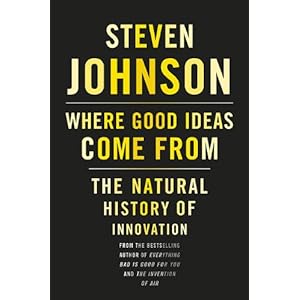
  • Keynote speaker Steven Johnson's concept of “the slow hunch” – let an idea grow gradually from inspiration. That's what we hope experiences at the Museum give our visitors – the beginning, the inspiration for their further learning.
  • Getting measurable ways to track moving from “Nice to Necessary.” Children's museums are nice places – no one argues with that – but we want to know we're addressing real needs, that we play a necessary role in our communities and beyond. Jeanne Vergeront said that being necessary starts with looking past our walls. We're pretty externally oriented – we work closely with Children's Friend Head Start, Providence Boys and Girls Clubs, DCYF and many other organizations to help them meet the needs of children and families in our community. I want us to look at these collaborations to make sure they are relevant and sustainable, which Julia Bland described as key to being necessary. She should know; she directs the Louisiana Children's Museum in New Orleans, which continues to be a major player in the city's recovery from the devastation of Katrina.
  • There has been tremendous growth in the number of children's museums over the past several years and a lot of museums have gotten bigger. Consequently, the market for hands-on exhibits has grown. More and more exhibit design firms have popped up, many of the larger children's museums are creating exhibits to sell or rent, and relatively fewer museums are designing and building their own unique exhibits. While this might be a trend toward efficiency, it's also akin to the “malling of America” – children's museums all over the country look a lot alike. I think we’re approaching a tipping point. There were several discussions and presentations about “the DIY alternative,” creating unique exhibits in-house (which was the norm 15-20 years ago). Paul Orselli showed images from several children's museum, including ours (thanks, Paul!), pointing out that all are examples of DIY museums – all imaginative, local, artful and themselves. In a session about “Courageous Design,” Brenda Baker from Madison (WI) Children's Museum and Nancy Stice from Phoenix Children's Museum presented on creating their museums in collaboration with their local communities and artists. The images of both Madison and Phoenix knocked me out – gorgeous places and you'll not find anything like them anywhere else.
http://www.childrensmuseumofphoenix.org/Common/Img/wideshot.jpg
Climber, © Children’s Museum of Phoenix
Two-story climber made with salvaged materials.
© Madison Children’s Museum

Robin Meisner, Director of Exhibits
The sessions and conversations I was part of have led me to thinking...

• that we and similar museums around the country have to think about the balance between encouraging caregivers to play with their children and encouraging them to be students of their children (learning from their kids by observing and celebrating their play and learning). We need to try different ways of communicating the value of the learning that happens through play to caregivers.

• that we need to consider children at the upper end of our age range carefully... what works for them about what we do and what might we do differently, perhaps even exploring the role new technologies might have in engaging them.

• that inspiration can come from anyone or anything, and that I truly enjoy working with our team in thinking about the design and development of our exhibits and environments.

Carly Baumann, Education Programs Coordinator
A favorite experience at the conference was riding the hotel’s glass elevators: one side facing downtown and the other creating the illusion of plummeting to the lobby. During our session about healthy risk, my co-presenters and I discussed the feeling of risk when riding the elevators as the ingredient that kept us involved in the play. It's typical for riders to silently face the doors in an elevator, but with the walls transparent, strangers came together in their love or aversion to the sensation – risk as "a social lubricant," as Aaron Goldblatt expressed it.
Speaker Dr. Milton Chen’s measurement of a great learning center: “Do the kids run in at the same rate they run out?” As much fun and learning as we had in Houston, I couldn't wait to see excited kids' feet flying up the entrance to Providence Children's Museum again!

Thursday, May 20, 2010

Field Trips – Not Just For Kids!

This post, about a recent staff field trip, was shared by Carole Ann Penney, assistant to the director of education.

Here at Providence Children’s Museum, we’re used to groups of kids arriving on school buses, excited to play and learn. But a few weeks ago, it was our turn! A big yellow bus pulled up and a group of 30 staff and AmeriCorps members loaded up for a field trip of our own.
We made the three-hour drive up to the Montshire Museum of Science in Norwich, Vermont. Montshire is a hands-on museum with exhibits that focus on the natural and physical sciences, ecology and technology. We explored their engaging exhibits and nature trails and met with staff members to learn more about the museum’s programs, environments and audience.

All of our staff love a good chance to:

Play and learn (of course)!

Get new ideas and inspiration for how to engage visitors.

Get a look at what other museums are working on.

Learn about how other museums design and maintain their exhibits.

And with our two new learning environments opening in The Children’s Garden soon, we especially enjoyed exploring their outdoor exhibits and trails, designed to get kids to play and discover outside!

All and all, it was a day of learning, fun and inspiration. Thank you, Montshire!